How might we use AI to prevent, catch and diagnose disease earlier in Saudi Arabia's non-profit health sector?
What happened
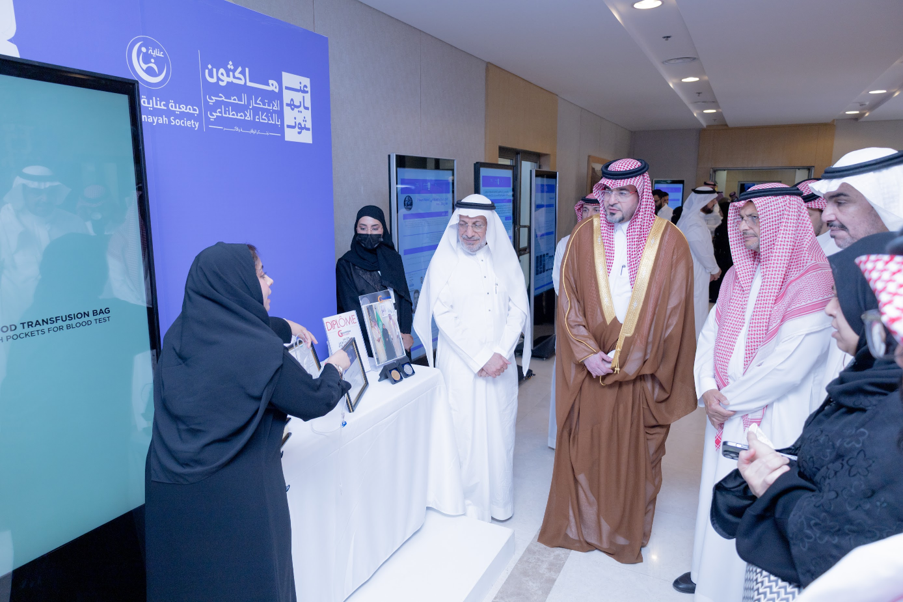
We ran the programme end to end: the judging criteria and the three tracks, the internal teams and governance model, the online platform, and the workshops and mentor sessions across three days in Riyadh. Ten teams pitched to the judging panel on the final day. At the close we worked with the winning teams to advance their solutions and connect them with incubation and delivery partners.
Read the full story →The challenge
Valuable ideas in healthcare come from people with no clear route to develop them: clinicians, specialists, and small companies working outside established channels. Enayah Health Society set three areas where AI could change outcomes rather than just workflow — prevention, early intervention and early diagnosis — and asked teams to build against them.
Background
Organised by Enayah Health Society and run end to end by MKMN, for the non-profit health sector. Open to anyone resident in the Kingdom aged 18 or over, in teams of two to five with a Saudi team leader. Each team picked exactly one challenge from one track. Attendance in Riyadh was mandatory for all four days.
What a good solution looks like
Three days in Riyadh to take one health problem from an idea to a working prototype. Teams picked a single challenge from one of three tracks, built against it with mentor support throughout, and pitched to a judging panel on the final day. Open to clinicians, researchers, engineers and small companies alike — the entry requirement was an idea worth building, not a company already built.
Tracks
3 tracks. A team picks one.
AI-enabled health technology
Innovative AI-based health technology that improves the quality of health services and the efficiency of care.
- Early prediction of patient deterioration and complications
- Finding hidden disease patterns in health data
- Reducing healthcare waste and unnecessary tests and procedures
Prevention against health risks
Preventive solutions that reduce health risks and strengthen the ability of individuals and communities to act before disease appears or worsens.
- Innovation in disease-prevention methods and technologies
- Predicting behavioural and environmental risk
- Building sustainable healthy habits
Early diagnosis of the most prevalent diseases
Solutions that raise the efficiency of early diagnosis for the most common diseases, speed up detection and limit complications.
- Innovation in early-diagnosis methods and technologies
- Early diagnosis for newborns
- Early prediction of chronic disease